
Head of Kenova Sir Iain Livingstone has called for the UK Government to publicly name Stakeknife after publishing its final report which detailed how the agent had committed “grotesque serious crime” including torture and murder.
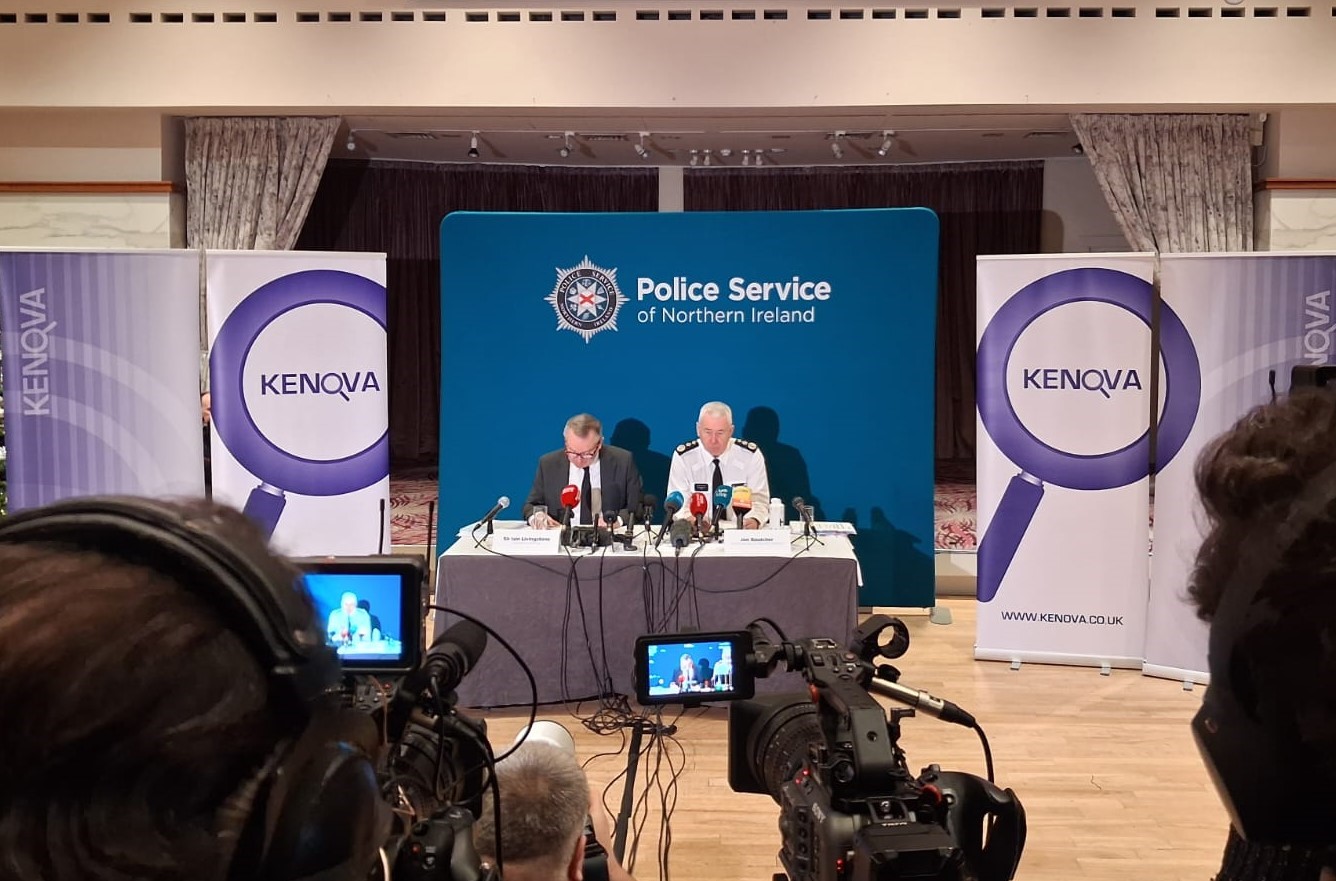
Sir Iain also urged Government to use the principles of the Kenova model for legacy investigations as he presented the 164-page document to his predecessor, and current Chief Constable of Police Service of Northern Ireland, Jon Boutcher marking an end to the nine-year investigation into Stakeknife’s offending and state handling. The Kenova final report also outlined the other separate enquiries carried out by the Kenova team, namely Operations Mizzenmast, Turma and Denton.
The report contains updates on the 10 recommendations made in the Interim Report published in 2024 and urged Government to depart from the Neither Confirm Nor Deny policy (NCND) in regard to Stakeknife on grounds of public interest.
Sir Iain said: “Having spent my life in policing and justice, I support NCND and know its value. Although the policy’s definition and use require review, Kenova has no intention to undermine NCND. However, NCND must be exercised in a proportionate and necessary manner and should not be an absolute bar to providing truth and justice. It cannot be used to protect agents who commit grotesque serious crime, leaving victims and families ignored and their demands for information and answers dismissed.
“As this Final Report makes clear, we in Kenova believe there is a compelling ethical case for the UK government to derogate from the NCND policy regarding the agent Stakeknife’s identity. It is in the public interest that Stakeknife is named.”
Stakeknife findings
Operation Kenova was initially set up to investigate the activities of the alleged army agent ‘Stakeknife’ within the Provisional Irish Republican Army’s Internal Security Unit.
The Final Report provides an overview of Stakeknife’s time as an informant, from his recruitment in the late 1970s through to the early 1990s. Investigators discovered a military unit known as the ‘Rat Hole’ was set up solely to assist the management of Stakeknife, and he was given a dedicated phone line which he could call at any time.
In total Kenova discovered 3,517 intelligence reports from Stakeknife including 377 in an 18-month period.
However, it found that ‘time and again’ the reports were not acted upon, with the protection of the agent apparently more important than protecting those who could and should have been saved.
The investigation revealed evidence of Stakeknife’s involvement in serious and unjustifiable criminality, including kidnap, interrogation and murder.
Prosecution files submitted to the Public Prosecution Service for Northern Ireland implicated Stakeknife in 14 murders and the abduction of a further 15 individuals.
MI5 further material recovered
The report outlines state failures around the handling of Stakeknife and describes the late discovery of further material by MI5 after publication of the Kenova Interim Report in 2024. The further material revealed MI5 had earlier and greater knowledge of the agent than previously stated.
Sir Iain said: “While the information in the additional files would not have altered prosecutorial decisions, further investigative opportunities were undoubtedly lost.
“The very fact that material owned and held by MI5 was not timeously disclosed understandably undermined the confidence of communities that state authorities had cooperated fully with Kenova. It was a significant failure on the part of MI5.”
Recovered evidence
The report details how Kenova investigators were able to use new techniques to re-examine exhibits seized during initial investigations such as tapings which had been used to bind or blindfold victims.
These tapings, along with bullet casings, confession tapes and letters and a firearm allowed detectives to identify suspects and even a victim of a non-fatal punishment shooting who was subsequently located as a key witness.
Scientific examination of these exhibits recovered DNA profiles and linked offences or suspects.
Future of legacy investigations
The report refers to the Northern Ireland Troubles Bill, which will repeal the 2023 Legacy Act and establish a reformed Legacy Commission and a joint Independent Commission for Information Retrieval.
In welcoming the new Bill, Sir Iain suggested there was an opportunity to build upon the experience of Kenova to ensure comprehensive, independent investigations and a focus on victims.
Sir Iain said: “Kenova has shown that the truth can be uncovered, but it requires determination, independence, and a commitment to those victims and families. Our work demonstrates the need for rigorous, transparent investigations and for the interests of those most affected to be placed at the centre of legacy processes.
“It is also crucial that sufficient investigative powers and resources are allocated to a reformed Legacy Commission to ensure every piece of available information is accessed and that families are given the whole truth of what happened to their loved ones.
“The lessons from Kenova should inform the new legacy legislation.”
Mizzenmast and Turma
The Kenova Final Report outlines the additional investigations and reviews that PSNI asked Kenova to conduct beyond its initial commission regarding the conduct of the agent Stakeknife.
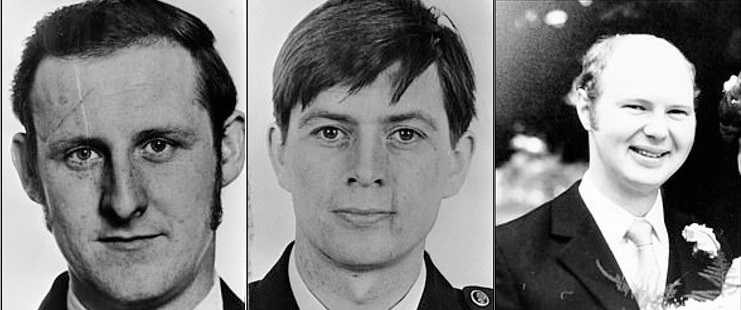
It summarises Operation Mizzenmast, the investigation into the murder of Jean Smyth-Campbell in 1972, and gives an overview of the background to Operation Turma, the murders of Sergeant Sean Quinn and Constables Paul Hamilton and Allan McCloy in an explosion at Kinnego Embankment in 1982.

Denton
Operation Denton, also known as the Barnard Review, was a thematic review of sectarian attacks by loyalist paramilitaries, referred to as the Glenanne series, between 1972 and 1978. The review examined over 98 incidents resulting in 127 deaths, assessing allegations of collusion between security forces and loyalist terrorists. It found clear evidence of collusion by some security force members who committed or facilitated horrific acts of sectarian violence including murder. The review also addressed previous investigations and the impact on victims and families, emphasising the importance of transparency and engagement.
The review concluded that no discrete 'Glenanne gang' existed but rather there was a broader network involving loyalist paramilitaries and some corrupt security force members. While collusion at the individual level was evident, some of it long established before Denton was initiated, there was no evidence of collusion at a political or strategic level. Denton’s findings included that the Belfast UVF was responsible for the Dublin and Monaghan bombings.
With regard to the entirety of Kenova’s work, Sir Iain said: “The Kenova team has worked intensely to seek answers, provide explanations and pursue justice. At times some of our findings did not align with what victims and families expected. However, our duty was to seek the truth relentlessly and then share as fully as we could with those who deserved to hear it and who had endured the traumatic attacks.
“Victims and families from the Troubles consistently demonstrate dignity and grace in the face of appalling suffering from brutal terrorism, at times compounded by state failures to act legitimately or with empathy and care.
“Kenova has from the outset put the interests of victims and families at the heart of its approach. We learned that an outcome through the criminal justice process may in fact not always be achievable or even what is desired. Kenova detectives prioritised listening and being responsive to questions unanswered for decades.
“This authentic engagement with victims and families is a key factor which distinguishes Kenova and must be adopted if the reformed legacy arrangements are to succeed.”
You can read the full report here.